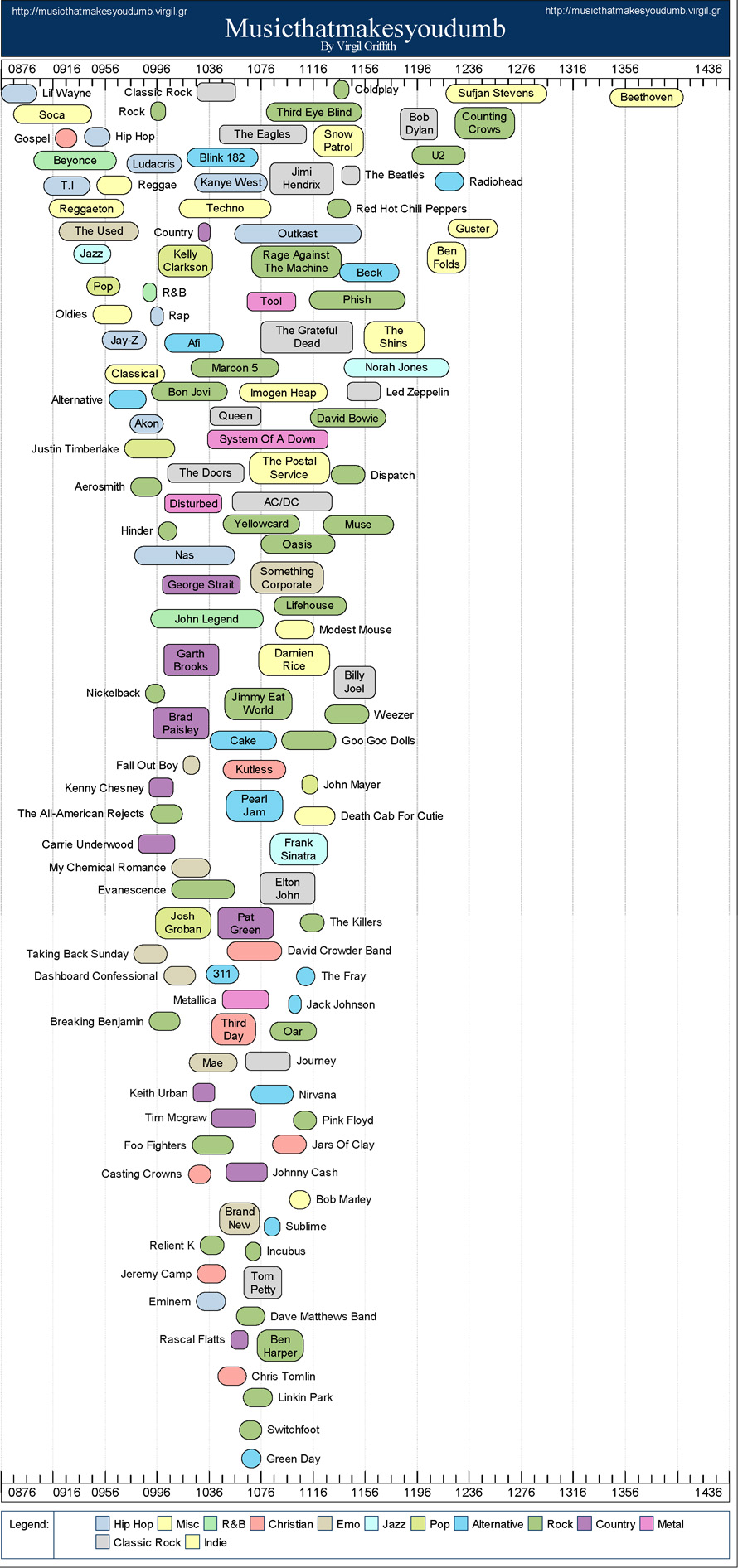


So, I asked for comments, and I got a good one. Apparently I hadn't enabled the thing properly. Anyhow, now you can while away the hours freely airing your humble-most thoughts in the comments field.
Thanks, Jay.


A Taste of Tomatis
"The Tomatis method refers to the work of Dr Alfred A Tomatis, an ear, nose and throat specialist born in France. His method—aka 'auditory training,' 'auditory stimulation' and 'listening therapy'—is intended to re-educate the way we listen to improve learning and language abilities, communication, creativity and social behaviour. Perhaps the most poignant aspect of his theory, though, is the Tomatis effect, which posits that we can vocalise only those sounds that we can hear. His groundbreaking research led Tomatis to the following conclusions:
The primary function of the ear is to convert sound waves to electrochemical impulses that charge the neocortex of the brain.
Sound is a nutrient; we can either charge or discharge the nervous system by the sounds we take in through both air and bone conduction.
There is a distinction between hearing and listening. The two are related, but distinct, processes. Hearing is passive; listening is active. This corresponds to the difference between seeing and looking. Listening and looking are active focussing processes.
The quality of an individual's listening ability will affect both spoken and written language development; listening ability also influences communication, thereby shaping the individuals's social development, confidence, and self-image.
The active process of listening can be enhanced or refucused by auditory stimulation using musical and vocal sounds rich in high frequencies. This entails the use of filtered and enhanced audio tapes employing the music of Mozart and Gregorian chant.
Communication is a process that begins in utero. The unborn child hears as early as the fourth month after conception. Sound actually helps the foetus's brain and nervous system to grow."
"The Sapir-Whorf hypothesis, also known as the Whorfian hypothesis, proposed that language affects thought, and the structure of the language itself affects cognition. As Whorf put it, "Language shapes the way we think, and determines what we think about.""My analysis was directed toward purely physical conditions, such as defective wiring, presence or lack of air spaces between metal flues and woodwork, etc., and the results were presented in these terms. ... But in due course it became evident that not only a physical situation qua physics, but the meaning of that situation to people, was sometimes a factor, through the behavior of people, in the start of a fire. And this factor of meaning was clearest when it was a LINGUISTIC MEANING [Whorf's emphasis], residing in the name or the linguistic description commonly applied to this situation. Thus, around a storage of what are called 'gasoline drums,' behavior will tend to a certain type, that is, great care will be exercised; while around a storage of what are called 'empty gasoline drums,' it will tend to be different -- careless, with little repression of smoking or of tossing cigarette stubs about. Yet the 'empty' drums are perhaps the more dangerous, since they contain explosive vapor. Physically, the situation is hazardous, but the linguistic analysis according to regular analogy must employ the word 'empty,' which inevitably suggests a lack of hazard. The word 'empty' is used in two linguistic patterns: (1) as a virtual synonym for 'null and void, negative, inert,' (2) applied in analysis of physical situations without regard to, e.g., vapor, liquid vestiges, or stray rubbish, in the container.
In studying the cause of a fire which had started under the conditions just described, Whorf concluded that it was thinking of the "empty" gasoline drums as "empty" in the meaning described in the first definition (1) above, that is as "inert," which led to a fire he investigated. His papers and lectures featured many other examples from his insurance work to support his belief that language shapes understanding."